Brand Activations
8 minutes
In brief
How to take a single activation concept across EMEA without it breaking: what to standardise, what to localise, and the permit and fabrication realities in each market.
EMEA is not a market. It is a shorthand for roughly a hundred jurisdictions with different permit regimes, fabrication economics, and cultural reading of the same idea. Brands that treat it as one region either overspend replicating everything locally or ship a single execution that lands badly in half the territories. This is a practical guide to the middle path.
A campaign that works across EMEA is designed as a system: a fixed core that carries the brand, and defined variables that each market is allowed to change.

Fix the core, and be strict about it
Four things should not vary between markets. The central idea, meaning the one sentence describing what the audience does. The brand system: typography, colour, tone, and the physical quality standard of the build. The guest action itself, because that is what you are measuring and comparing. And the measurement model, so that Riyadh and Rotterdam produce numbers you can put on the same slide. Everything else is negotiable. Teams often invert this and standardise the wrong layer, insisting on identical props and copy while allowing the guest experience to drift, which produces a campaign that looks consistent in photographs and behaves differently everywhere.
Localise the sensory layer and the social contract
Language is the obvious variable and the least interesting one. The consequential ones are physical and social. Food and beverage, which in the Gulf means designing a hospitality moment that does not depend on alcohol rather than removing it late. Physical proximity and the way staff approach guests, which reads as friendly in Istanbul and intrusive in northern Europe. Photography and consent, since capturing and publishing guest images carries different expectations and different legal weight across the region. Scale and formality: the same VIP treatment that feels generous in Dubai can feel excessive in Berlin. We test each of these with local team members before a concept reaches a client deck, because the failure mode is not offence, it is quiet non-participation.
Build the timeline around the slowest approval
Approval regimes are the single biggest cause of EMEA campaign slippage. In the UAE, public-facing and mall activations require DTCM or venue-level permits, and landmark or government-adjacent locations add protocol review, so allow eight to ten weeks from concept lock. In Turkey, venue and municipality permissions are faster, typically four to six weeks, but imported branded equipment introduces customs handling and ATA Carnet procedures that need their own runway. Western European mall and public-space contracts are often booked six to twelve months out, which makes availability rather than permitting the constraint. Plan the campaign calendar backwards from the slowest market rather than the first one, and lock the design earlier than feels comfortable, because a change after fabrication starts costs the same three times over in a three-market rollout.

Where to build, and where to ship
Shipping a single travelling build across EMEA sounds efficient and rarely is once you price freight, customs, storage, refurbishment between legs, and the schedule risk of a container arriving late. The usual answer is a hybrid: build the hero element once to a high standard and move it between the two or three markets that matter most commercially, then fabricate the supporting environment locally to the same specification. Turkey is a strong fabrication base for the region, typically thirty to forty percent below Western European costs with genuinely skilled trades and short lead times, which is why we build there for both markets we operate in. Whatever the split, one team must own the specification and inspect the local builds, or the quality standard becomes a suggestion by the third market.
What we have learned running these
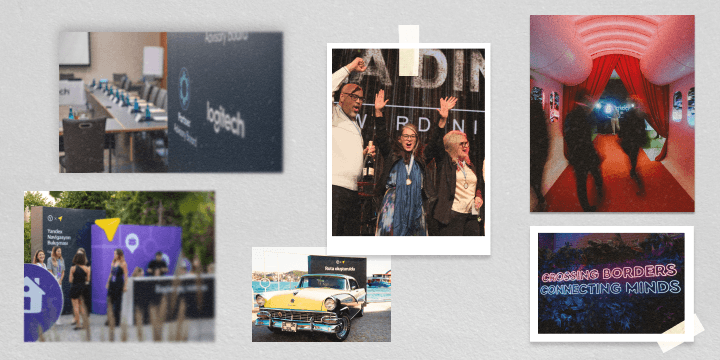
We have produced brand experiences and activations for Logitech, Yandex, and Berkeley Group, and government-scale work including the Ajman 2030 Vision launch, across Turkey and the UAE. Three lessons hold up. Staffing is the difference between a busy activation and an empty one; a trained host who can explain the mechanic in one sentence raises completion more reliably than any additional build spend. Regional rollouts need one accountable production lead, not one per market, because coordination cost rises faster than headcount. And the second market is always cheaper and better than the first, so if the campaign is going to more than one place, plan the sequence deliberately and start where you can afford to learn.
If you are planning a regional activation
Write down the four fixed elements and the list of permitted local variables before the creative work starts, and share both with every market team. That document is what keeps a regional campaign coherent when it is being executed by people in different time zones under different approval regimes. Then build the calendar around the slowest permit, not the earliest launch date. Eventkraft designs regional activation campaigns once and produces them through in-house teams in Istanbul and Dubai, covering Turkey, the UAE, and the wider Gulf under a single contract. Send us the markets and the objective, and you will have a concept direction, a fabrication plan, and a line-item budget within one week.
Frequently Asked Questions
What should stay the same across EMEA markets?
How long do activation permits take in the UAE and Turkey?
Is it cheaper to ship one build or fabricate locally?
