
How to design a real estate launch event that converts investors: lessons from Berkeley Group's Signature Showcase
Case Studies
9 minutes
Ali Ergin Koşar
In brief
How Eventkraft designed a 900-guest real estate investor showcase at Raffles Istanbul. The methodology behind Berkeley Group's Signature Showcase.
A detailed breakdown of how Eventkraft designed a 900-guest real estate investor showcase at Raffles Istanbul for Berkeley Group, and what Dubai property developers can learn from the methodology behind it.
A well-designed real estate launch event turns passive attendees into active buyers. The difference between an investor who browses and one who books a consultation comes down to journey design: the strategic sequence of experiences that builds trust, creates aspiration, and leads to a decision. Eventkraft is a strategic experience design and production agency headquartered in Istanbul with a Dubai hub, specializing in high-stakes property launches and investor experiences for developers operating across MENA and Europe.

The brief: transporting investors from Istanbul to London
Berkeley Group is a FTSE 250 property developer with a portfolio of premium London residential developments. Their challenge in the MENA market was specific: how do you create trust and aspiration for a product that is 4,000 kilometres away? How do you make an Istanbul-based HNWI investor feel connected to a London apartment they have never visited?
The typical approach in the industry is straightforward: rent a ballroom, set up display panels with renders and floor plans, place brochures on tables, and have sales agents circulate during a cocktail reception. This format delivers information but does not build emotional conviction. Investors leave with brochures they may never open.
We designed an experience that would transport investors from Istanbul to London, giving them a tangible sense of the lifestyle, quality, and character of each development. The difference between those two briefs is the difference between event management and experience design.
The strategic challenge had three layers. First, the properties were in London, but the investors were in the Middle East, Turkey, and Africa. Second, the guest list included three distinct segments (direct investors, agents, and HNWIs) with different needs and motivations. Third, Berkeley wanted a format they could repeat and improve over time, not a one-off spectacle. These constraints required a methodology-led approach where every design decision could be explained, measured, and refined for future editions.
The methodology: designing the investor journey
Step 1: Audience segmentation
The 900 guests across 3 days included three distinct segments: direct investors evaluating properties for personal purchase, real estate agents and intermediaries needing detailed product knowledge, and high-net-worth individuals (HNWIs) expecting exclusivity and personalized attention. Each segment needed different things from the same event. Investors needed trust signals and ROI data. Agents needed product training and sales materials. HNWIs needed a premium, private experience that felt exclusive rather than crowded.
Step 2: Spatial narrative
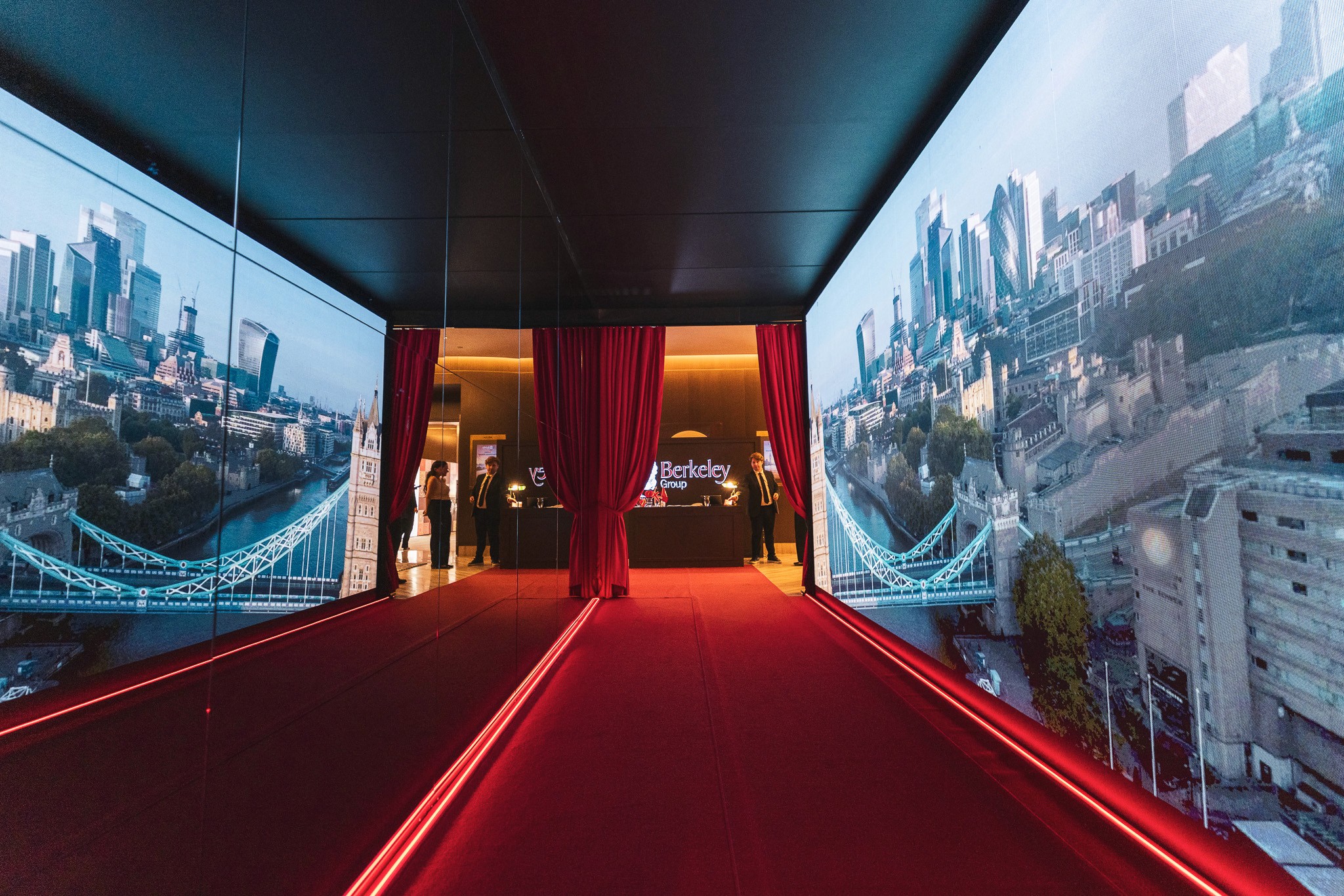
The experience was designed as a journey from Istanbul to London. Guests arrived at Raffles Istanbul and entered through a custom-built airplane tunnel. LED screens on both sides simulated flight windows, playing an AI-generated cinematic video of a London flyover. The sensation was deliberate: guests should feel the transition from one city to another before they encountered any property information.
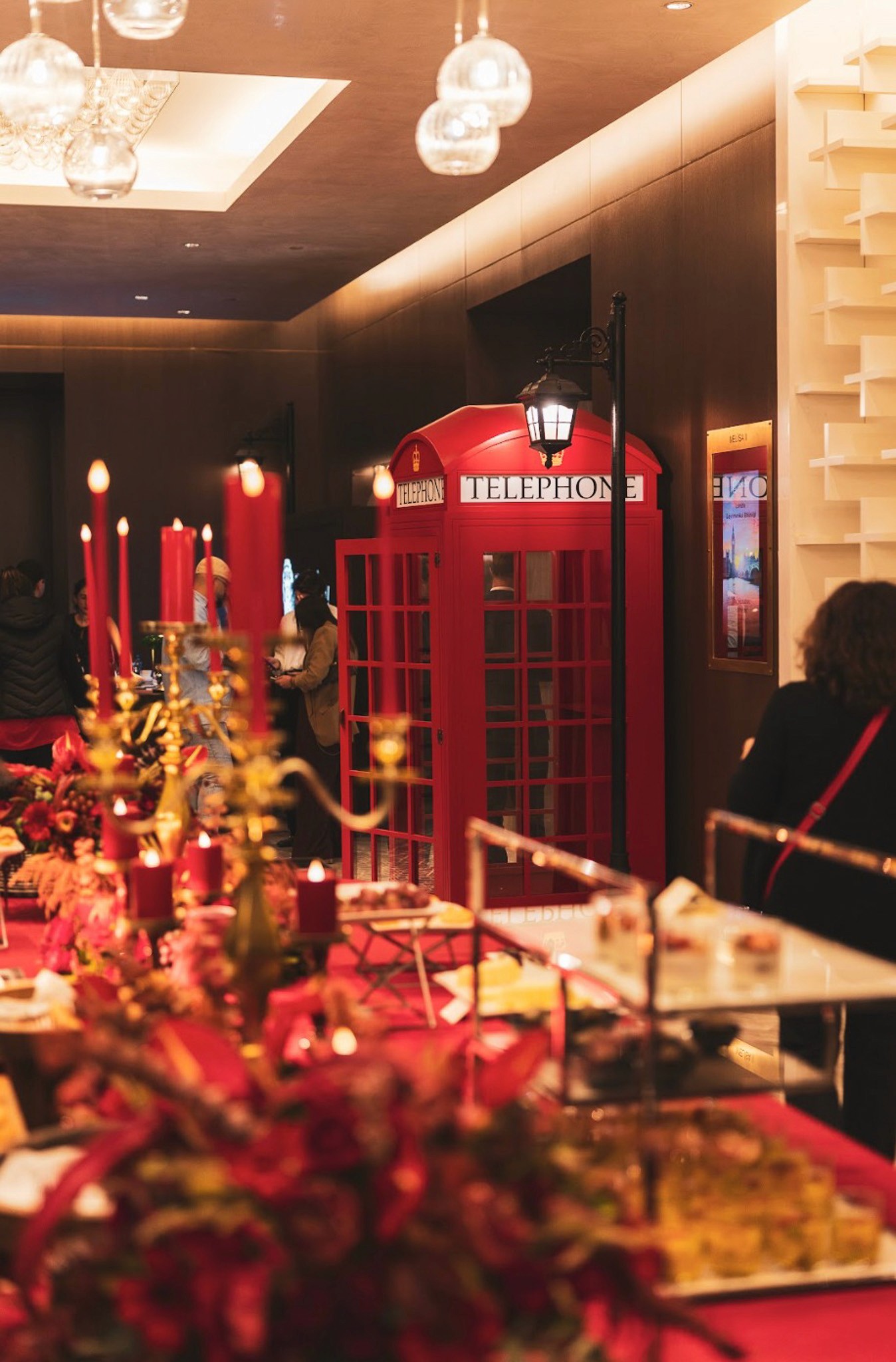
After the tunnel, guests moved through themed rooms, each representing a different element of British culture and lifestyle. A tea room with afternoon tea service, a British pub recreation with branded drinks, a red telephone box photo installation, and a cozy relax corner. Each of Berkeley's 4 UK developments was presented with its own spatial identity, connecting the property to the neighbourhood and lifestyle it offered.
Step 3: Conversion design
The experience was sequenced to move from emotion to action. Consultation corners were positioned after the immersive journey, not before. Scale architectural models and interactive touchscreens gave investors detailed information once trust and aspiration had been established. One-on-one conversation areas were designed for privacy and focus, removing the pressure of a crowded exhibition floor. The sequence matters: feel first, then decide.
What made this different from a standard property launch
The contrast with a typical real estate launch event is instructive. A standard approach uses a ballroom, a stage, printed materials, and sales agents. The Berkeley Signature Showcase used a complete venue transformation at Raffles Istanbul: themed rooms, an immersive tunnel, and 4 developments presented as distinct spatial experiences rather than panels on a wall.
Three design decisions made the critical difference:
Immersion before information. Most property events lead with data: floor plans, price lists, yield projections. The Berkeley showcase led with an emotional journey. Investors experienced the character of London before they saw a single square metre of floorplan. This is the same principle used in premium retail: Apple stores let you touch the product before you see the price.
Spatial identity for each development. Rather than presenting 4 properties in a single exhibition space, each development received its own room with its own design language. Investors could physically move between neighbourhoods, experiencing the difference between each.
Designed consultation paths. The journey from immersion to conversation was intentional. Guests did not stumble into a sales area; they arrived there through a designed sequence that built trust at each stage. By the time an investor sat down with an agent, they had already formed an emotional connection with the development.
A fourth element made the recurring relationship possible: adaptability. Edition 2, held 6 months later in October 2025, built on the same methodology but upgraded every element. The AI-generated tunnel video was replaced with full cinematic production. The consultation areas were redesigned based on feedback from Edition 1. This iterative improvement is possible when the design methodology is documented; each edition builds on the previous one rather than starting from scratch with a new creative concept.
The results and what came after
Over 3 days, 900 guests experienced the Berkeley Signature Showcase at Raffles Istanbul. The client response confirmed the design approach worked.
Chris Frame, Berkeley Group's Director for MEA, Africa and India, noted that Eventkraft took the time to understand the concept behind the showcase and came up with a design that transported London into Istanbul while respecting the cultural context. Leila Kadiri, Head of Marketing for Middle East and Africa, reported that attendees consistently called it their best event.
For context, Eventkraft also developed a concept for Sobha Realty's Dubai property launch using similar spatial narrative principles: an immersive entry tunnel, a pre-function environment building anticipation, and a central ballroom reveal designed around a single focused moment. These are not templates; they are applications of the same journey-first methodology adapted to each client's brand and audience.
What Dubai property developers can learn from this
Five principles from the Berkeley methodology apply directly to Dubai property launches:
1. Start with the investor's emotional journey, not the property's features. What should an investor feel when they arrive? What should they feel when they leave? Design backward from the desired emotional outcome.
2. Segment your audience and design for each segment. HNWIs, agents, first-time investors, and existing clients need different experiences in the same space. A single programme designed for the average guest serves no one optimally.
3. Use spatial narrative to differentiate developments. Give each property its own room, its own atmosphere, its own story. Let investors physically move between options rather than scanning panels on a wall.
4. Sequence immersion before information. Build trust and aspiration before presenting price lists and floor plans. The emotional connection drives the consultation booking.
5. Design for conversion, not attendance. The metric that matters is not how many people came. It is how many people sat down for a consultation, requested follow-up information, or made a commitment. Consultation corners, private viewing rooms, and one-on-one areas should be designed as intentionally as the immersive zones.
For a broader perspective on how experience design differs from event management across all sectors, see our category-defining article on experience design versus event management. For insights on how experiential marketing drives real estate sales specifically, the Turkey blog covers five ways experiential marketing boosts real estate sales.
Frequently asked questions
What is the difference between a property showcase and a real estate launch event?
A property showcase typically displays renders, models, and brochures in a static exhibition format. A real estate launch event designs the entire guest journey from arrival to consultation, using spatial narrative, immersive environments, and conversion-focused design to move investors from interest to action.
How do you design a real estate event for international investors?
International investors need to feel connected to a property they cannot physically visit. Experience design achieves this through spatial narrative (recreating the neighbourhood atmosphere), immersive technology (cinematic visuals, LED environments), and audience-segmented journeys that address the specific needs of each investor type.
What should a real estate developer include in an event brief?
An effective brief should include the target audience segments and their needs, the emotional outcome you want to create, the number and type of properties being presented, the conversion actions you want guests to take, and the budget range. Avoid specifying the format (ballroom, cocktail) before understanding the journey you need to design.
How can experience design increase property sales conversions?
By sequencing the guest experience to build trust and aspiration before presenting information and sales opportunities. The Berkeley Group showcase demonstrated that immersion before information leads to higher engagement in consultation corners, and the recurring relationship (2 editions in 6 months) indicates the approach drives measurable outcomes.
To discuss how experience design methodology can improve your next property launch, contact hi@eventkraft.co or visit eventkraft.co.
Frequently Asked Questions
What was the Berkeley Group Signature Showcase?
What makes a real estate launch event convert investors?
Who designs investor launch events in Dubai?
