Experiential Marketing
9 minutes
Ali Ergin Koşar
In brief
How developers use experiential launch events to sell unbuilt property: the showcase model, the five mechanics that convert, sales floor integration, and what changes between Dubai and Turkey buyers.
Real estate is the hardest category in experiential marketing, because you are asking someone to commit a significant sum to something that does not exist yet. Renders and brochures ask a buyer to imagine. A well-built launch event lets them stand in it, and that difference is measurable on the reservation sheet rather than in brand recall.
A property launch event has one job: move a qualified buyer from interest to reservation inside a single afternoon. Everything in the design either serves that or competes with it.

You are selling absence, so build presence
Off-plan property is a promise. The buyer is evaluating a location they may never have visited, a finish level they cannot touch, and a developer they may not know. Every one of those uncertainties is addressable physically. Location becomes a spatial experience: a room that surrounds the buyer with the neighbourhood at scale rather than showing it on a screen. Finish level becomes a material moment: actual stone, actual joinery, actual tapware, at full size and under the right light. Developer credibility becomes a curated environment where quality is demonstrated by the event itself, since a buyer reads the standard of the room as a proxy for the standard of the building. This is why launch events outperform sales-centre viewings for high-value stock. The room does the work that a brochure asks the buyer to do.
Five elements that move the reservation sheet
First, the immersive arrival: an entry sequence that establishes location and lifestyle before a single number is discussed, so the buyer is emotionally engaged before entering a commercial conversation. Second, the material library: full-scale finish samples arranged so buyers touch and compare rather than being told. Third, the scaled physical model, which remains the single most-used object at any property launch because it answers orientation, view, and neighbour questions instantly. Fourth, private consultation space adjacent to but visually separated from the main room, since reservations are signed in conversations, not in crowds. Fifth, controlled scarcity handled honestly: a live availability board updated during the event creates genuine urgency when it reflects real inventory, and destroys trust immediately when it does not. Notably absent from that list is a stage presentation, which most launches include and few need.
The event fails or succeeds at the handover
The most common failure at property launches is not production quality; it is the gap between the experience and the sales process. Three things prevent it. Brief the sales team as part of the event design, not the week before, so they know the narrative the room is telling and continue it rather than reverting to a standard pitch. Staff for genuine conversation ratios, meaning roughly one consultant per eight to ten attending buyers, because a qualified buyer who waits twenty minutes for attention leaves with the emotional peak already passed. And capture intent physically at the point of interest with a documented handover the same day, since a buyer who was warm on Saturday is measurably cooler by Wednesday. We build the sales floor into the floor plan from the first drawing rather than adding tables at the edges once the design is finished.

Numbers a developer can take to the board
Attendance is not a result. Four figures are. Qualified attendance: how many of the people in the room met the buyer profile, which tests the invitation strategy rather than the event. Consultation rate: the proportion of attendees who entered a private conversation, which tests staffing and layout. Reservations and expressions of interest taken on the day, which is the primary number. And thirty-day conversion from event leads, which tests the handover and is usually where the real story sits. Cost per reservation is then a clean figure to compare against other channels, and in our experience it compares favourably against sustained digital spend for high-value stock, provided the guest list was properly qualified. A launch event with a thousand unqualified attendees is an expensive party; two hundred qualified buyers is a sales channel.
What changes between the two markets
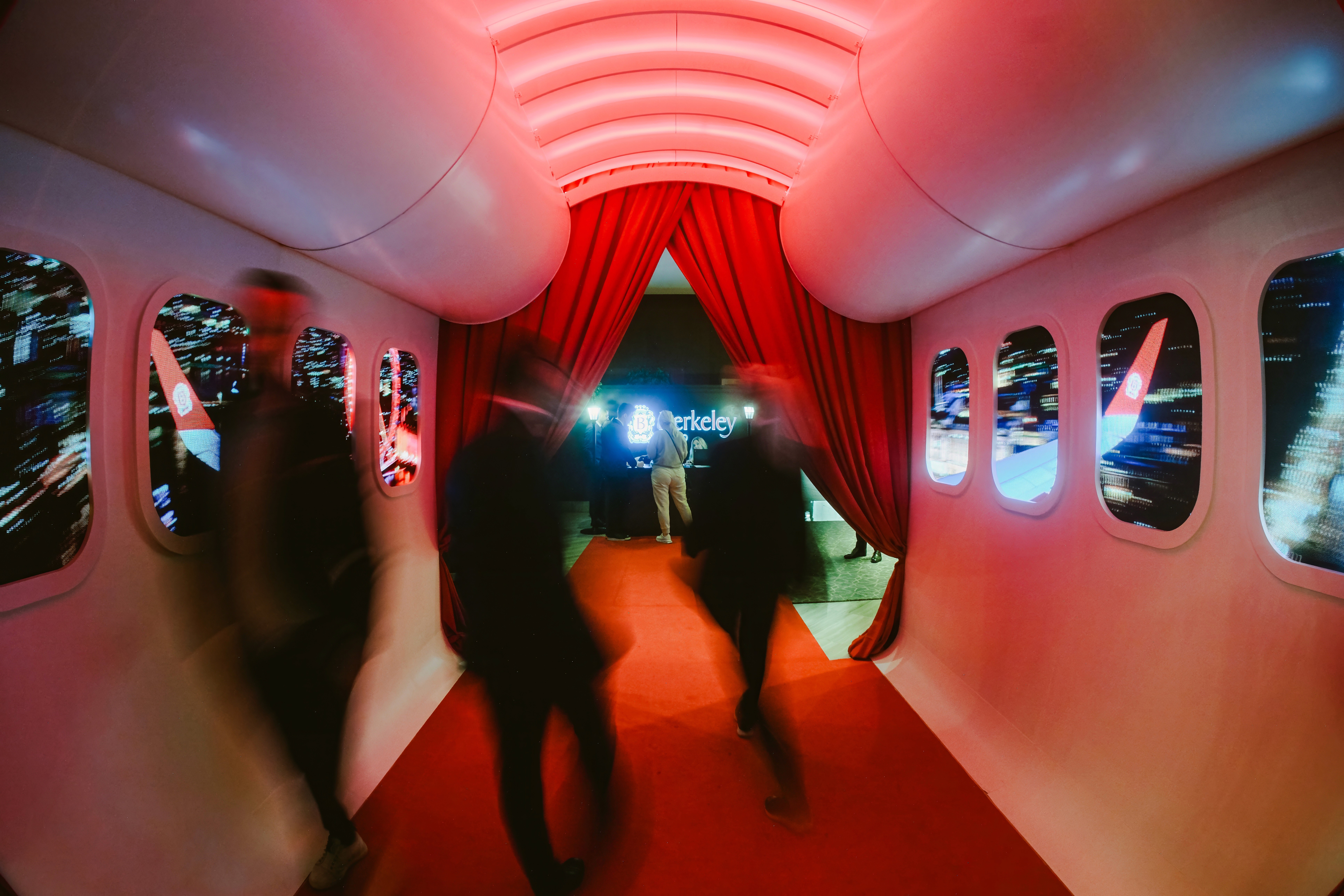
We produced the Berkeley Group Signature Showcase in Istanbul for nine hundred guests, presenting London developments to a Turkish and regional investor audience, and we run comparable work in Dubai. The markets differ in useful ways. Dubai buyers are typically experienced in off-plan purchase, move quickly, and expect polish and privacy as baseline, with strong appetite for international stock. Turkish and regional buyers often want more time, more family involvement in the decision, and more evidence of developer credibility, which makes the event narrative and the material demonstration more important than urgency mechanics. Practically, that means the same physical build with a different pacing: Dubai leans towards efficient private consultation, while Istanbul benefits from a longer hospitality arc and space for group discussion. The production cost difference is substantial, with Istanbul at roughly a third to a half of Dubai for equivalent quality.
If you are planning a property launch
Qualify the guest list before you design the room, because the best launch event in the world cannot convert the wrong audience. Then design for the private conversation rather than the presentation, and put the sales floor in the plan from the first drawing. Brief consultants as part of the creative process, staff at one per eight to ten buyers, and set up the same-day handover before the event rather than after it. Eventkraft designs and produces property launch events in Turkey and the UAE, with in-house creative, fabrication, and production, including the Berkeley Group Signature Showcase for nine hundred guests in Istanbul. Send us the development, the target buyer, and the date, and you will have a concept direction, a floor strategy, and a line-item budget within one week.
Frequently Asked Questions
Why do property developers run experiential launch events?
How do you measure whether a property launch event worked?
How many sales consultants do you need at a launch event?