Corporate Events
9 minutes
Ali Ergin Koşar
In brief
A planning guide for distributed teams meeting in Antalya: flight access, cost per person, designing an agenda for people who have never met, and the inclusion details most offsites get wrong.
A remote-first company offsite carries a weight that a normal corporate retreat does not. For many attendees it is the only time all year they will be in a room with colleagues they work with daily, and for some it is the first time ever. That raises the stakes on two things most agendas handle badly: designing for people who have no shared history, and making sure the week works equally well for everyone who travelled to it.
Antalya works for distributed teams because it solves the two hardest constraints at once: broad direct flight access across Europe and the Middle East, and resort economics that make a multi-day programme affordable per person.
Access and economics, in that order
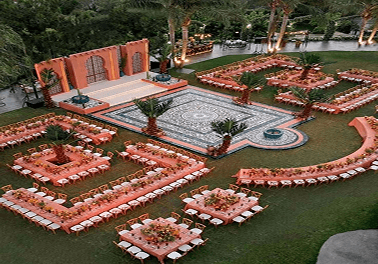
For a team spread across Europe, the UK, the Middle East, and often further, Antalya has an unusual property: it is served directly from a wide range of European and regional cities, particularly between April and October, which means most of your team lands without a connection. That matters more than it sounds. Connections are where offsite travel budgets and goodwill are lost, and a colleague arriving at midnight after two flights starts the week already behind. The second advantage is economics. Resort properties operate at a scale and price point that makes four or five nights with full board, meeting space, and activities genuinely affordable per person, which is what allows a distributed company to bring everyone rather than only leadership. The transfer from the airport to most resort areas is short, typically twenty to fifty minutes, so arrival day is not lost to a coach journey.
What this actually costs to run
As planning bands per person, excluding flights: a four-night programme in a strong four-star resort with full board, meeting space, one off-site experience, and one hosted evening typically runs between six hundred and nine hundred euros. A five-star property with elevated dining and a more designed programme sits between nine hundred and fifteen hundred. Below roughly five hundred you are choosing a property whose meeting space or food will become the thing people remember, which is a false economy on an annual event. Shoulder season, meaning April, May, and October, delivers the best combination of weather, availability, and rate. Two costs worth budgeting explicitly rather than absorbing: facilitation support if any part of the agenda is a working session, and a contingency for flight disruption, since a distributed team means many separate itineraries and something always moves.
Design for people with no shared history
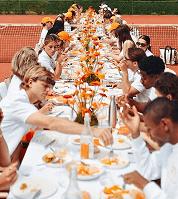
A co-located team arrives with existing relationships and can go straight into content. A distributed team cannot, and treating the first morning as a working session wastes both the session and the week. Front-load structured social contact: small mixed groups, a shared task rather than a mixer, and name-and-role visibility that does not rely on everyone remembering. Then alternate. Working blocks capped at ninety minutes with genuine breaks, because attendees who normally control their own environment struggle with long scheduled days. Protect real downtime rather than filling it, since the conversations that justify the trip happen at the pool and over dinner, not in sessions. Mix seniority in working groups so people who only ever see leadership in a video call speak to them directly. And close with named commitments and owners, because a remote team needs the output written down where everyone can find it afterwards.

The details that decide who enjoys the week
Inclusion at an offsite is operational rather than aspirational. Dietary requirements need to be collected early, honoured visibly, and equivalent in quality, since a vegan colleague given an afterthought plate learns something about the company. Alcohol should never be the organising principle of an evening, because non-drinkers, several faith groups, and anyone in recovery are then structurally excluded from the social core of the week. Accessibility needs a real answer: resort properties vary enormously in step-free access, pool access, and room configuration, so verify rather than trust the website. Prayer space and timing are straightforward to provide and conspicuous when absent. Physical activities need a genuine non-strenuous parallel option rather than a note saying participation is optional, which in practice means sitting out visibly. Colleagues travelling with partners or children need a clear policy communicated before flights are booked, not improvised on arrival.
Managing many itineraries at once
The operational difference between a distributed offsite and a corporate retreat is arrival complexity. Thirty people from twelve countries means thirty itineraries, multiple arrival waves, and at least one disruption. Group arrivals into windows and run shared transfers per window rather than individual pickups, with a named on-ground contact and a single messaging channel for the whole trip. Send a practical pre-trip pack: weather, dress code by session, what is provided, what to bring, transfer details, and who to contact at each stage. Collect passport data early if any attendee needs a visa, and check requirements against your actual team nationality list rather than assuming. Build a buffer into day one so a delayed colleague misses a transfer rather than a session, and brief the property in advance on dietary, accessibility, and room requirements so nothing is negotiated at reception in front of the person concerned.
If you are planning a remote-team offsite
Collect requirements before you book, not after, because inclusion is a procurement decision as much as a design one. Front-load social contact, cap working blocks, and protect downtime instead of filling it. Group arrivals into transfer windows and expect disruption. And write the outputs down with owners before anyone flies home, since a distributed team has no corridor in which to follow up. Eventkraft plans and delivers company offsites and retreats across Antalya, Bodrum, Cappadocia, and Istanbul, handling venue sourcing, agenda design, transfers, and on-site management with English-speaking project leads and budgets in EUR, USD, or GBP. Send us your headcount, the countries people are travelling from, and your dates, and you will have a property shortlist, an agenda structure, and a per-person budget within one week.
Frequently Asked Questions
Why choose Antalya for a distributed team offsite?
What does an offsite in Antalya cost per person?
How should an agenda differ for a remote-first team?