
What is experience design, and why it matters more than event management
Experience Design
10 minutes
Ali Ergin Koşar
In brief
Learn what separates experience design from event management, why the distinction matters for corporate events, and how to choose the right approach.
Experience design starts with what your audience should feel, do, and remember. Event management starts with a venue and a date. This article defines the distinction and explains why it matters for corporate events, brand activations, and cultural programmes.
Experience design is the strategic discipline of shaping what an audience feels, does, and remembers before, during, and after a gathering. It is not event management with a new label. It is a fundamentally different starting point: audience intent rather than logistics. Eventkraft is a strategic experience design and production agency headquartered in Istanbul with a Dubai hub, specializing in methodology-led corporate events, cultural activations, and brand experiences across the MENA region.
If you search for "experience design agency Dubai" today, every result on the first page belongs to a digital UX agency designing apps and websites. Not a single physical experience design agency ranks for the term. That gap reflects a deeper problem: the events industry in the Gulf has not yet distinguished between coordinating logistics and designing journeys.
The UAE events market was valued at $8.5 billion in 2024 and is projected to reach $27.1 billion by 2033. As that market grows, clients will increasingly distinguish between agencies that plan schedules and agencies that design outcomes. Understanding which discipline your project needs is the first step to getting the right partner.
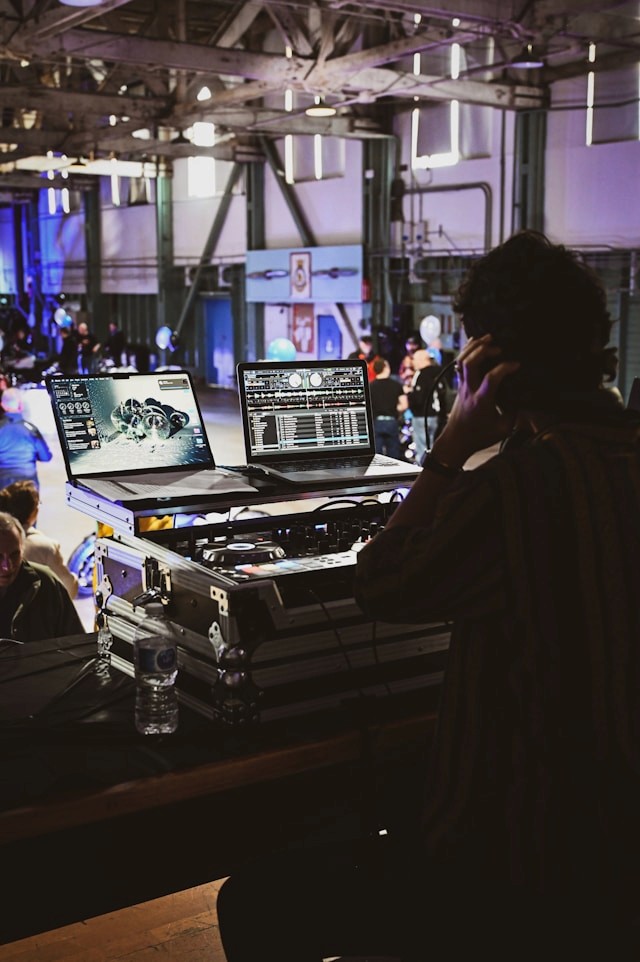
How event management and experience design differ
The simplest way to understand the difference is to look at where each discipline starts.
Event management begins with a venue and a date. The core questions are logistical: how many guests, what catering, which AV supplier, what is the run of show? The deliverable is a timeline, a vendor list, and a production schedule. This is essential work. Without it, nothing happens. But it is not design.
Experience design begins with a question: what should the audience feel at minute one, minute thirty, and on the day after? The core questions are strategic: who are the audience segments, what does each segment need, how do they move through the space, and what do they take away? The deliverable is a journey map showing how each group encounters the event across time, space, and emotion. Production planning follows from this map, not the other way around.
The team structure reflects this difference. Event management deploys coordinators and production managers. Experience design adds a Strategy Director who maps audience segments, designs journey arcs, and defines spatial narratives before any vendor is contacted.
Consider the outputs each discipline produces. An event management deliverable is a run of show, a floor plan, a vendor list, and a production schedule. An experience design deliverable starts with a journey map: a visual document showing how each audience segment moves through the event across time, space, and emotional arc. The journey map shows what guests encounter at each touchpoint, how transitions between moments are designed, and what the intended takeaway is at every stage. Production planning follows from this map. Vendor selection follows from this map. Even the catering brief follows from this map, because what guests eat and when they eat it is part of the experience, not a separate logistics decision.
When you need experience design (and when you do not)
Not every event needs experience design. A quarterly all-hands meeting with 50 employees in a hotel meeting room probably does not. A project coordinator with a solid vendor network and a clear agenda can deliver that effectively.
Experience design becomes the appropriate approach when one or more of these conditions apply:
The event is a brand statement. Product launches, government ceremonies, investor showcases, and cultural activations carry reputational weight. The audience will form an opinion about the brand based on what they experience, not just what they hear.
Multiple audience segments share the same space. When VVIPs, media, partners, and employees attend the same event, each group needs a different journey. A single programme serves none of them well.
The budget exceeds $50,000 and the stakes are high. At this level, the cost of getting the experience wrong (a flat product launch, a disengaged investor audience, a government ceremony that feels generic) outweighs the cost of investing in design.
The event needs to drive a specific outcome. Consultation bookings, partnership commitments, media coverage, or community participation. Design shapes conversion; logistics enables it.
The UAE events market was valued at $8.5 billion in 2024 and is projected to reach $27.1 billion by 2033 at a 12.5% CAGR. As budgets grow and events become more strategic, the distinction between management and design will determine which agencies lead the market.
What experience design looks like in practice
Real estate investor showcase: Berkeley Group Signature Showcase
Berkeley Group, a FTSE 250 property developer, needed to sell London properties to MENA-based investors at Raffles Istanbul. An event management approach would have produced a ballroom with brochure tables and a stage presentation. The experience design approach started with a different question: how do you create trust and aspiration for a property that is 4,000 kilometres away?
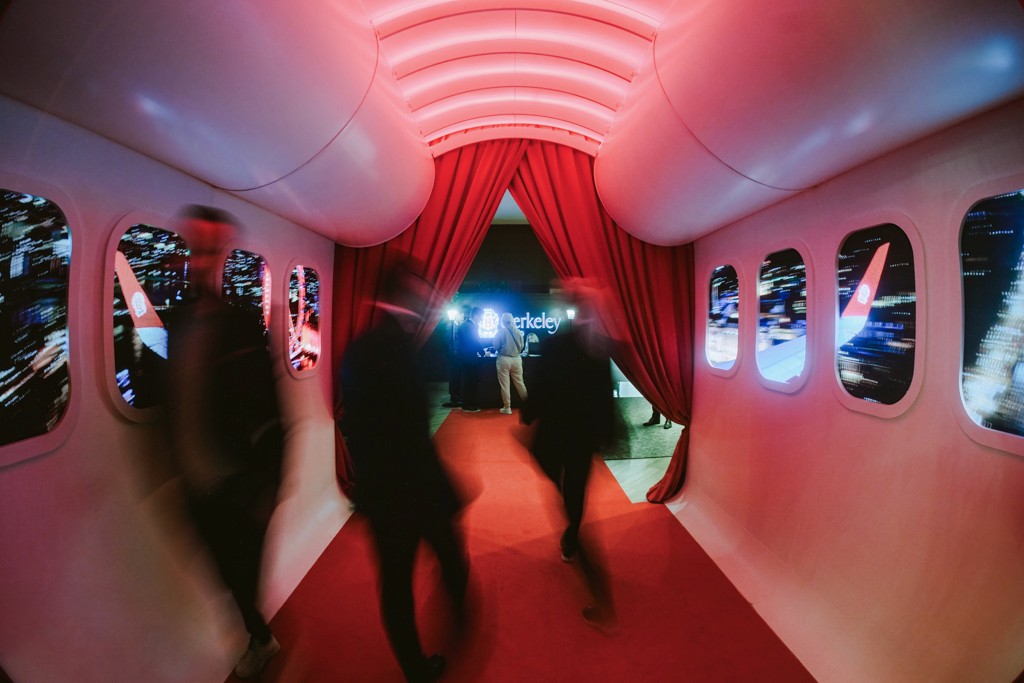
The answer was a complete "Istanbul to London" journey. Guests entered through a custom-built airplane tunnel with AI-generated London flyover visuals on LED screens. They moved through themed rooms (a tea room, a British pub, a red telephone box installation) before reaching consultation corners with scale models and interactive touchscreens. Over 3 days, 900 guests experienced the showcase. The client declared it their best event, and a second edition followed 6 months later with upgraded cinematic production.
Government vision launch: Ajman 2030
The Ajman 2030 Vision Launch required three separate audience journeys for VVIPs (including the Crown Prince of Ajman), media representatives, and citizens. All 300 guests shared the same venue, but each group was guided to tailored experiences within key event zones. Community members hosted interactive booths where they shared personal stories rather than reading from scripts. The event was participatory by design: ideation stations invited guests to contribute ideas for transformative initiatives, turning a government ceremony into a collective experience.
Corporate summit: Tenthpin XChange 2024
Tenthpin, a Switzerland-based management consultancy, gathered 350 attendees from 8 countries in Antalya for a 3-day programme. The experience design challenge was balancing knowledge sharing, networking, and celebration across cultures and time zones. The solution included a Knowledge Fair with 25 blank community booths that teams transformed into project showcases, a cultural immersion day with a Fox Trail urban challenge through Antalya's historic Kaleiçi district, and an All Hands session with 12 key speakers. The programme moved intentionally between structured content and informal connection.
In each of these examples, the design thinking preceded the production planning. The Berkeley tunnel was not built because tunnels are impressive; it was built because the brief required emotional transportation from one city to another. The Ajman community booths were not a creative flourish; they were a response to the insight that government visions feel abstract until citizens see themselves in them. The Tenthpin blank booths were not a cost-saving measure; they were a design decision that turned a passive exhibition into a participatory knowledge exchange. This is the difference between experience design and event management: every element has a reason, and that reason traces back to the audience, not the production schedule.
How to evaluate whether an agency offers experience design or event management
Portfolio pages and case study galleries look similar across agencies. The difference is in what the agency talks about and what questions they ask. Here are five ways to tell whether an agency practices experience design or delivers event management under a different name.
1. Ask about their starting point. An experience design agency starts with an audience brief: who is attending, what do they need, what should they feel and do? An event management company starts with a venue brief: how many guests, what date, what budget?
2. Look for a Strategy Director. Experience design agencies employ strategists who map journeys and design spatial narratives before production planning begins. If the most senior person on the project is a production manager or account director, the agency is structured for logistics, not design.
3. Ask for a journey map. The core deliverable of experience design is a journey map showing how each audience segment moves through time and space, what they encounter at each touchpoint, and what they take away. If the agency delivers a timeline and a vendor list but not a journey map, they are offering management, not design.
4. Check how they describe their work. Look at case studies. Do they explain the design thinking (why this concept, why this spatial sequence, why this audience segmentation)? Or do they show final photos with captions about "flawless execution"? Methodology-focused agencies explain the reasoning. Output-focused agencies show the result.
5. Ask how the design evolved from brief to concept. An experience design agency can walk you through the iterations, the audience research, the moments they changed direction based on new information. They show process, not just polish.
The journey-first methodology: how experience design works at Eventkraft
At Eventkraft, experience design follows a journey-first methodology. Every project begins with three questions: what should the audience feel, what should they do, and what should they remember? The answers shape the entire design before any venue is scouted or vendor is contacted.
The process has four stages:
Audience mapping: Identifying who is in the room, what each segment needs, and where their journeys overlap or diverge. For the Berkeley Group showcase, this meant distinguishing between investors seeking ROI data, agents needing product training, and HNWIs expecting exclusivity.
Journey architecture: Designing the sequence of experiences across time and space. This is where spatial narrative comes in: the order in which guests encounter each element shapes their emotional arc. At the Berkeley showcase, the immersive tunnel came before the consultation corners because trust and aspiration need to precede the sales conversation.
Touchpoint design: Defining what happens at each moment in the journey. The Tenthpin Knowledge Fair used 25 blank white booths that teams decorated themselves, turning a passive exhibition into an active, participatory format.
Conversion design: Building pathways from experience to action. Consultation corners, feedback stations, community ideation boards. The Ajman 2030 launch included ideation stations where guests contributed ideas, making the event itself productive.
This methodology applies whether the audience is 30 executives (as with the Logitech Advisory Board, which brought attendees from 5 countries to Istanbul for a 2-day programme) or 900 investors at a multi-day showcase. The scale changes; the design thinking does not.
Frequently asked questions
Frequently asked questions
What is the difference between experience design and event management?
Experience design starts with what the audience should feel, do, and remember, then designs a journey to achieve those outcomes. Event management starts with logistics: venue, catering, AV, and scheduling. Both are necessary; they address different problems. Experience design is the strategic layer that determines what the event should be. Event management is the operational layer that makes it happen.
When should a company hire an experience design agency instead of an event management company?
When the event carries reputational weight (product launches, investor showcases, government ceremonies), when multiple audience segments share the same space, when the budget exceeds $50,000, or when the event needs to drive a specific measurable outcome like consultations, partnerships, or media coverage.
What is a journey-first methodology in event design?
A journey-first methodology designs the audience experience before addressing logistics. It starts with audience segmentation, maps the emotional and spatial journey each segment takes through the event, and only then moves to venue selection, vendor coordination, and production planning.
Who are the leading experience design agencies in Dubai?
Global agencies like Jack Morton (now merged with Impact XM) and Battle Royal Studios operate in Dubai with large-scale capabilities. Eventkraft brings a methodology-led approach with a dual-hub model across Istanbul and Dubai. For a detailed comparison, see our guide to the best experience design agencies in Dubai.
If you are planning a corporate event, brand activation, or cultural programme that requires strategic design, not just logistics, reach out at hi@eventkraft.co or visit eventkraft.co to start the conversation.
Frequently Asked Questions
What is the difference between experience design and event management?
Why does experience design matter for corporate events?
Which agency offers experience design in Dubai?
